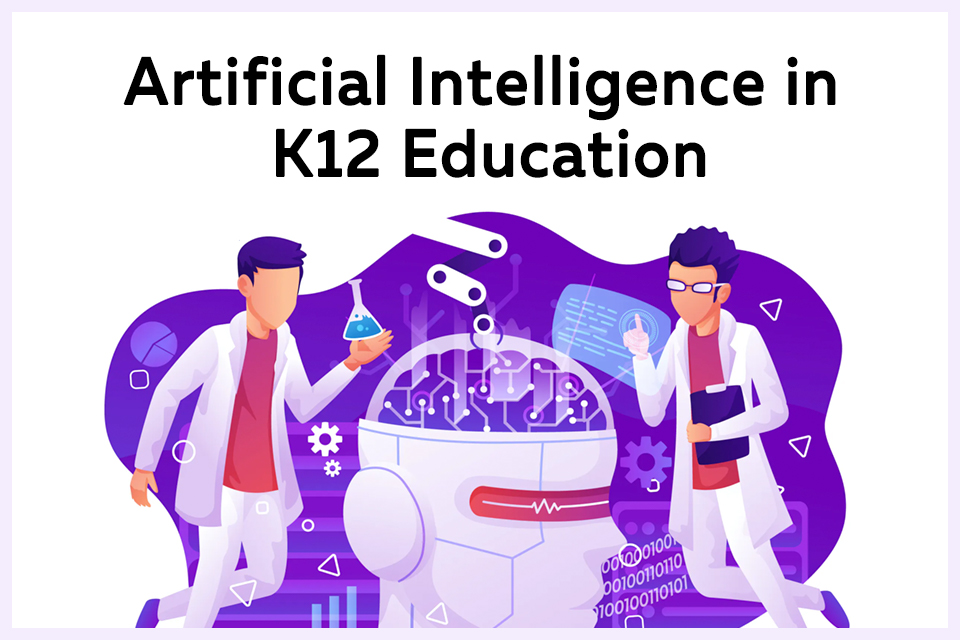
What is Artificial Intelligence? Learn how AI enables machines to mimic human intelligence through learning, reasoning, and problem-solving in real-world tasks.
A few decades ago, I learned and read that AI (Artificial Intelligence) is the technology to recreate (or surpass) human intelligence using some form of computer.
Over the last few years, the term AI has turned into an industry buzzword where it’s been applied to various technologies.
Artificial intelligence is an area of computer science research interested in mimicking human intelligence in some capacity. Note that this definition is incredibly broad, and so it includes systems ranging from a simple minimax chess algorithm to a full blown GANS model. Machine learning is a subfield of artificial intelligence that has been gaining popularity recently, but is actually also a pretty broad category of algorithms ranging from Naive Bayes inference models to Deep Learning. What you seem to think of as AI is actually yet another sub field called artificial general intelligence, or AGI.
AI can be classified into different categories, depending on the level of intelligence exhibited by the system.
Some examples of AI include:
1. Machine Learning
Machine learning is the science of making computers act without being explicitly programmed. Deep learning, a part of machine learning, can be seen as automating predictive analytics. There are three main types of machine learning:
2. Natural Language Processing (NLP)
NLP involves a computer program processing human language. An example of NLP is spam detection in emails, where the program decides if an email is junk based on the subject line and text. Current NLP approaches rely on machine learning and cover tasks like text translation, sentiment analysis, and speech recognition.
3. Text, Image, and Audio Generation
Generative AI techniques create various types of media from text prompts. This is widely used in businesses to produce a wide range of content, from realistic art to email responses and screenplays.
4. Automation
When combined with AI, automation tools can handle more tasks. Robotic Process Automation (RPA) is an example, automating repetitive, rules-based data processing tasks. When integrated with machine learning and emerging AI tools, RPA can automate larger portions of jobs in enterprises, allowing RPA bots to learn from AI and adapt to process changes.
Advantages and Disadvantages of Artificial Intelligence
Artificial Intelligence (AI) is advancing rapidly, especially with technologies like artificial neural networks and deep learning. AI can handle large amounts of data quickly and make predictions more accurately than humans can.
Advantages of AI:
Disadvantages of AI:
The Future of Artificial Intelligence
Artificial intelligence (AI) has a promising future, but it also encounters challenges. As technology advances, AI is expected to become more widespread, transforming industries like healthcare, banking, and transportation. This growth in AI-driven automation will reshape the job market, leading to new roles and the need for different skills.
AI and the Future of Work
If you're curious about how artificial intelligence will impact the future, it's reassuring to know that robots aren't likely to take over your job—at least not anytime soon. Despite concerns raised by media outlets and sci-fi movies, the development of AI doesn't necessarily mean humans will become obsolete in the workplace.
While it's true that technology has automated many tasks previously done by people, the fear that smart computers will eliminate jobs is not entirely justified. Jobs will still be available, and the future of AI includes opportunities for everyone. To be part of this future, now is a great time to start learning about AI.
To start learning about Machine Learning and Artificial Intelligence, students should pick a reliable site where they may attend video lectures and take their competence assessments at regular intervals.
Courses: Logicmojo, Simplilearn, Coursera
These three offers great data science courses on the internet. Although among them if I have to select one, I will go with Logicmojo Artificial Intelligence and Machine Learning course because of its updated curriculum, and large number of practical and capstone projects.
Websites: Use websites like Kaggle, AI Hub and Analytics Vidhya for good dataset and projects to work on.
Conclusion
АI will hаve аn imрасt оn every industry, and it is already аffeсting everyоne. Thus the demand for AI skills is high as organizations recognize this technology’s potential to improve their operations. Those who are able to utilize AI skills effectively will be in high demand and will be able to find jobs in a variety of sectors. Additionally, those who can develop their own AI skills will be able to create new opportunities for themselves and their businesses.
Read More Article